More than 250 years ago, a plant left the Eastern Cape of South Africa on a wooden sailing ship.
It was strapped to the deck, where rain and sunlight could reach it during the months at sea. When the ship arrived in London, the plant travelled by barge along the Thames to Kew. It reached the gardens in 1775 and has been growing there ever since.
Now it is preparing to move again.
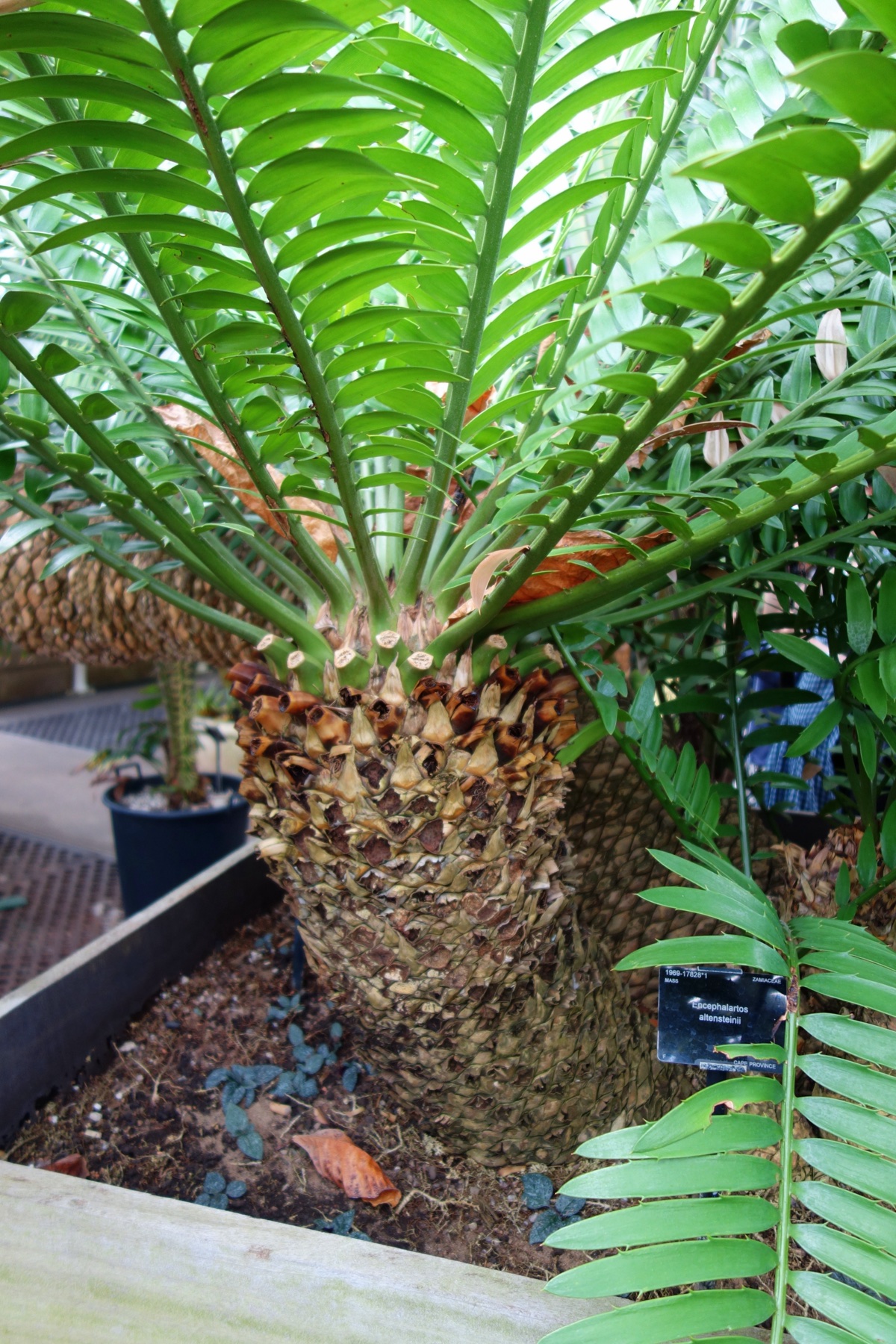
The plant is an Eastern Cape giant cycad, Encephalartos altensteinii. It resembles a palm and has the stature of a small tree, but it is neither a palm nor, botanically speaking, a true tree. Cycads belong to an ancient lineage of seed plants that existed long before flowering plants appeared.
Kew calls this individual the oldest potted plant in the world. It weighs more than a tonne, stands over four metres high and is still producing new shoots. As the Victorian Palm House is emptied ahead of a major renovation, this old traveller is among the specimens that horticulturists and specialist movers are preparing to relocate.
A passenger from another century
Francis Masson collected the cycad in South Africa in the early 1770s. Masson was Kew’s first official plant collector, sent abroad to find plants for the expanding royal collection.
The journey belongs to the history of exploration, science and horticulture, but also to the more complicated history of European empires moving living things across the world. Plants were collected, classified and transported through networks shaped by colonial power. The cycad itself cannot explain that history. Its presence at Kew is part of it.
What we can see is a living organism that survived the crossing.
Britain in 1775 was a different country. The United States had not yet declared independence. The first railway powered by a steam locomotive was decades away. Kew was not yet the public botanical institution it would become.
The cycad had already begun its London life.
Before the Palm House
It is tempting to imagine the specimen and the Palm House as inseparable. Its long, reclining trunk and crown of stiff green fronds now seem to belong beneath that curved roof of iron and glass.
But the cycad had lived at Kew for more than 70 years before the Palm House opened in 1848.
In 1819, it produced the only cone recorded during its time at the gardens. Naturalist Joseph Banks witnessed it. Banks, who had advised the monarch on Kew and helped direct its scientific ambitions, died the following year.
For most plants, a reproductive event belongs to a season. For this individual, one season in 1819 remains part of a biography that is still continuing in 2026.
A plant becomes part of a building
The Palm House was constructed in the 1840s to create a controlled home for tropical plants. Its shipbuilding-inspired structure enclosed heat, humidity and an increasingly global botanical collection.
The cycad moved inside in 1848, the year the glasshouse opened. Over the following 178 years, plant and building aged together.
Eastern Cape giant cycads grow slowly. Kew puts this specimen’s average growth at about 2.5 centimetres a year. A young plant may appear almost trunkless, but over time it develops a thick stem. With age, that stem begins to recline. Kew’s specimen now rests on supports because it cannot carry its own weight unaided.
Its stillness hides a surprising amount of work. Horticulturists adjust watering through the seasons and monitor a plant whose appearance changes very little from year to year. In July 2009, a team of nine lifted the cycad, renewed its soil and settled it into a new container made from sapele wood.
Repotting a houseplant usually means moving it from one manageable container to another. This one already weighed more than most small cars.
Now the house needs help
The Palm House has endured the same warm, wet atmosphere that keeps its collection alive. Humidity and poor ventilation have contributed to corrosion, while thousands of panes of glass and the building’s systems require extensive work. Kew plans to conserve the Palm House and neighbouring Waterlily House while making them the first net-zero heritage glasshouses of their kind.
The work means removing the living collection before major construction can begin. Since 2024, Kew’s horticulturists have been propagating plants through cuttings and air layering. Some specimens are being moved to other parts of the gardens; others will live in a purpose-built temporary glasshouse or in Kew’s tropical nursery.
Not everything can travel. Some of the tallest palms have grown too large to remove and will be felled, with young plants or propagated material preserving their place in the future collection.
The Palm House remains open while this preparation continues. Subject to funding, renovation work is expected to begin in 2027 and the building phase is expected to last about four years.
Moving the oldest resident
The Eastern Cape giant cycad can be moved, but only just.
Its mass, leaning form, living roots and historic container make the operation closer to moving a fragile sculpture than transporting an ordinary plant. According to current reporting by The Guardian, Kew has enlisted specialist movers accustomed to handling rare and delicate works of art to help relocate it.
The comparison is useful, but incomplete. A sculpture does not continue growing while a building changes around it. This cycad does. Even now, supported and awaiting another journey, it is producing fresh shoots.
Kew has not announced that the move is complete. For now, the specimen is still part of the Palm House’s gradual decant: a living object being prepared for a temporary address while its home is repaired.
The strange geography of one plant
South Africa.
A ship.
The Atlantic.
The Thames.
Kew.
The Palm House.
And now another temporary home.
It has survived all the places humans have taken it.
That does not make place unimportant. The species belongs to the Eastern Cape, where it grows naturally in habitats ranging from rocky slopes and coastal shrubland to evergreen forest. The cultivated specimen at Kew carries a different geography: the place it came from, the route by which it was removed, and the institution that has kept it alive for more than two and a half centuries.
Moving it again will add another layer rather than erase the earlier ones.
What stays when a living thing moves?
Old plants complicate the distinction between an organism and an artefact. The cycad is not a museum object. It needs light, water, warmth, space and continuous care. Yet its documented life also makes it a witness to human history.
It has outlived generations of gardeners, visitors and directors. It was already old enough to cone before the Palm House existed. Then the building became so closely associated with it that relocating one now feels like temporarily separating two parts of the same story.
The move is necessary precisely because both are meant to continue: the plant in suitable conditions, the glasshouse after conservation.
Some remarkable trees tell their story by remaining exactly where they are.
This tree-like plant tells its story by surviving the journey.
Trees I Saw
Every tree has a place. Some have a travel history.
Sources and image
- Royal Botanic Gardens, Kew: Meet the oldest pot plant in the world
- Royal Botanic Gardens, Kew: Palm House renovation project
- The Guardian: Kew Gardens begins moving and propagating plants ahead of the Palm House renovation
Image: Kew’s Encephalartos altensteinii, photographed by Daderot on 24 May 2024. Wikimedia Commons, CC0 1.0 Universal.
