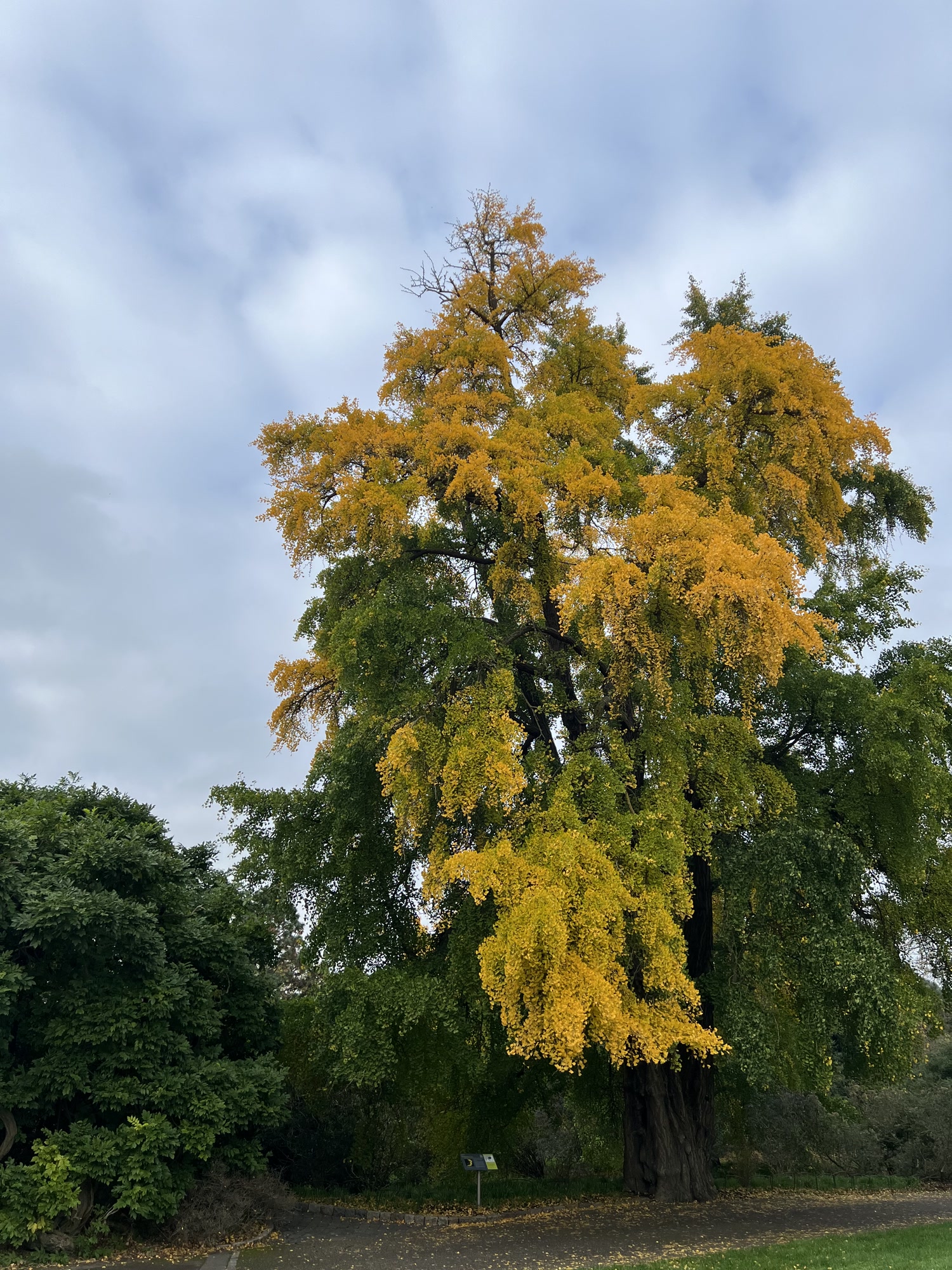
Planted in 1859, Geelong’s great ginkgo has appeared in generations of wedding photographs—and is now Victoria’s Tree of the Year.
There is a tree in Geelong, Australia, that has appeared in generations of wedding photographs.
The couples change. The cameras change. The city changes. But the tree remains, quietly becoming part of other people’s most important memories.
In October 2026, this ginkgo was named Victoria’s Tree of the Year. Its story began 167 years earlier.
A seed planted in 1859
The ginkgo grows in Geelong Botanic Gardens, where it was planted from seed in 1859. Local legend says a ship’s captain brought the seed from China. The voyage is a charming possibility, but the details are not fully documented.
What is established is the tree’s long presence in the gardens, sustained by generations of horticultural care. It now stands approximately 20 metres tall and is described by the National Trust as Victoria’s largest ginkgo, possibly the largest cultivated example in Australia.
A landmark in other people’s photographs
The tree has become a favourite backdrop for weddings and special celebrations. A photograph taken today may share the same trunk and canopy as one taken decades ago.
Trees can become part of personal history without being the centre of the event. They provide a place people return to, even as their lives change.
Older than it looks—in one important sense
The Geelong ginkgo is 167 years old, but the evolutionary lineage of ginkgos stretches back to the Jurassic. Fossil relatives with distinctive fan-shaped leaves lived when dinosaurs still roamed.
The distinction matters: this individual tree is not millions of years old. Its botanical family has an extraordinarily ancient history.
The tree also has unusual hanging woody growths, sometimes known as chichi, which resemble stalactites and make its trunk particularly striking.
Gold leaves, strong smells
In autumn, ginkgo leaves turn a brilliant yellow. But the Geelong specimen is female, and the fleshy coverings around its seeds can produce a strong smell as they decompose.
It is a delightful contrast: an elegant tree that is also messy, peculiar and unmistakably alive.
A public favourite
On 27 October 2026, the National Trust announced that the Geelong ginkgo had won Victoria’s Tree of the Year. It received 27% of 4,435 votes against eight other finalists.
The organisation used the award to argue for stronger protection of significant mature trees. A replacement sapling cannot instantly recreate the decades of growth and shared memory that make an established tree special.
A tree that stays
We often look for remarkable trees in distant forests. But sometimes they stand in a public garden, familiar enough that people forget how extraordinary they are.
The Geelong ginkgo is a botanical survivor, a garden landmark and a quiet witness to generations of celebrations.
How many human stories can one tree become part of?
Trees I Saw is an observation project about trees, places and the stories that gather around them — treesisaw.com.
Sources
- National Trust: Ginkgo biloba in Geelong voted Victorian Tree of the Year 2026
- ABC News: Geelong’s 167-year-old ginkgo wins Tree of the Year
- City of Greater Geelong: tree collection
Representative image (not the Geelong tree): Eddie Johnston, Wikimedia Commons, CC BY-SA 4.0.