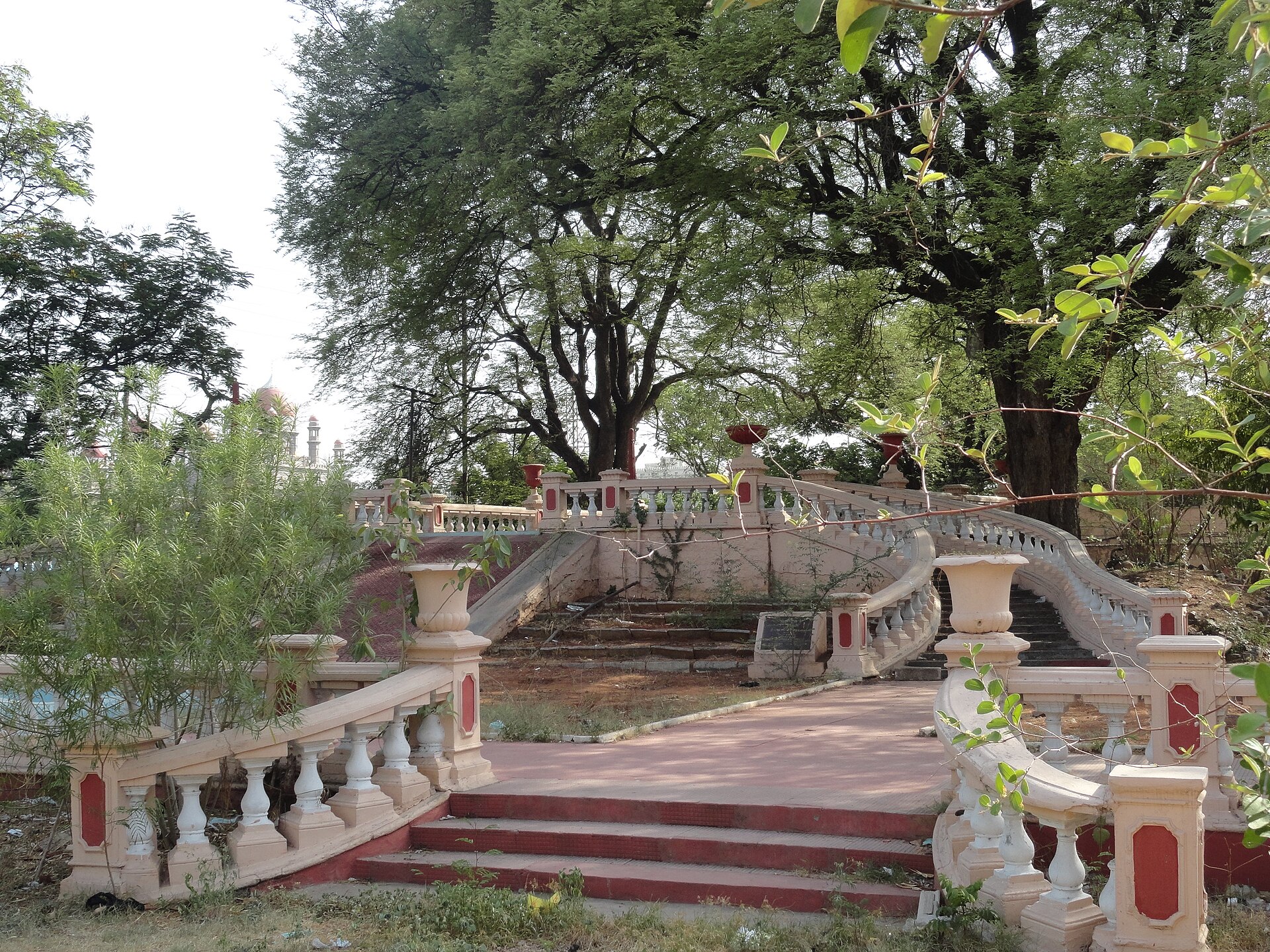
During Hyderabad’s catastrophic flood of 1908, about 150 people reportedly climbed into one tamarind tree. It is still standing.
The tree stands inside the grounds of Osmania General Hospital with a small board fixed to its trunk. It is not fenced off like a monument, or separated from the city by glass. It is a tamarind: a broad crown, heavy limbs, shade falling across a working hospital compound beside the Musi River.
The board makes an extraordinary claim. During the great flood of 1908, it says, this tree saved about 150 people.
That number has been repeated for generations. It appears in local reporting and civic commemorations, but it is not a surviving headcount made on the night. The careful word is about. The certain things are the flood, the date, the place—and a tree large enough for frightened people to climb.
The night the river rose
On 28 September 1908, after exceptional rain, the Musi broke through Hyderabad. Contemporary records and later histories describe bridges swept away, neighbourhoods inundated and thousands of people killed. What was then Afzalgunj Hospital stood close to the river.
According to the account preserved in Hyderabad, people trapped by the water climbed the tamarind in the hospital grounds. Reports say they remained among its branches for two days while the flood moved below them. The tree was not planted as a refuge. Nobody had calculated its load or marked an evacuation route towards it. Its usefulness came from the simplest facts of its body: deep anchorage, a thick trunk, and branches within reach.
Cities usually describe infrastructure in concrete and steel. On that night, infrastructure also had leaves.
What the tree can prove
A living tree is a compelling witness, but not an archive that can speak. It cannot confirm how many hands held its bark, or what those people said while they waited. To repeat the story responsibly is to keep both parts together: a documented disaster and a local account attached to one surviving organism.
The distinction does not weaken the story. It shows how civic memory works. A number may pass from testimony to newspaper, from newspaper to plaque, until it becomes part of how a city understands a place. The tamarind gives that memory an address.
In 2002 it was given the name Prana Dhatri—“giver of life”—during a commemoration of the flood. People have gathered beneath it to remember those who died. The tree has also faced more ordinary urban threats: concern over road widening, fungal growth and the difficulty of caring for an old organism in a crowded city.
A monument that is still alive
Stone monuments are meant to resist change. Trees do the opposite. They add wood, shed limbs, respond to injury and decline. Their survival is active rather than fixed, which makes them awkward heritage objects and unusually powerful ones.
The Hyderabad tamarind connects a present-day hospital compound to a disaster more than a century old. Yet it is not valuable only because it is old. Its value lies in the relationship between a particular body and a particular event: water rising, people climbing, roots holding.
There is no need to turn it into a flawless legend. “About 150” is honest enough. The flood was real. The refuge was remembered. The tree remains where the story says it stood.
Walk past it today and the dramatic night is no longer visible. There is traffic, hospital work, dust, shade. That ordinariness may be the most affecting part. The emergency ended; the living structure that answered it did not.
What should a city do with a tree that once became the highest ground?
Trees I Saw is an observation project about trees, places and the stories that gather around them — treesisaw.com.
Sources
- The Times of India: the tamarind and the 1908 Musi flood
- The New Indian Express: the tree’s condition and continuing risk
Photo: Bhaskaranaidu, Wikimedia Commons, CC BY-SA 3.0.