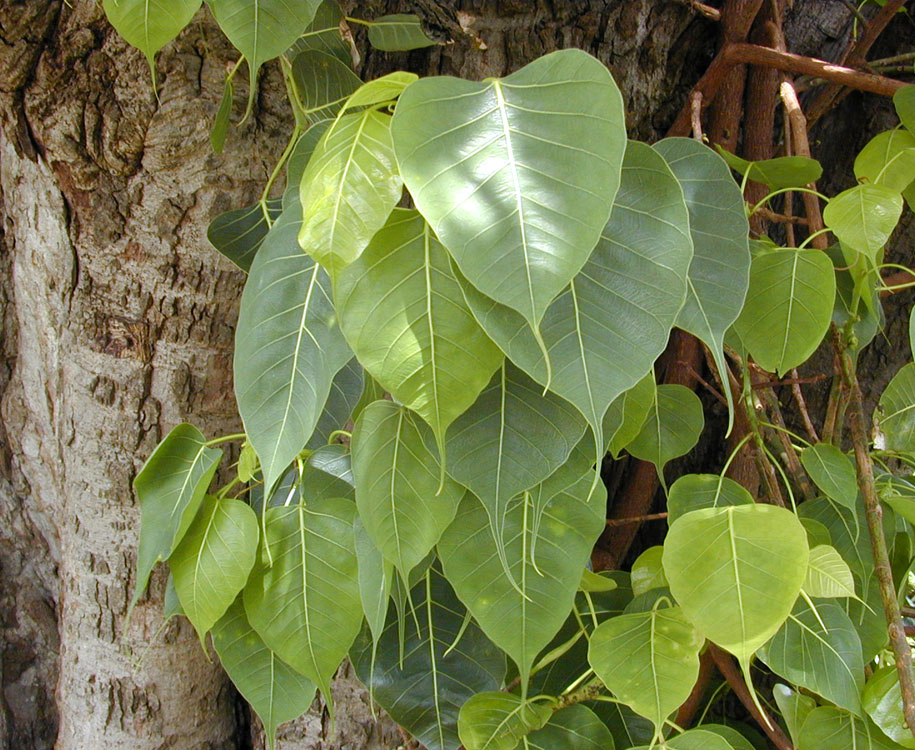
In a park in South Australia, a new Bodhi tree was planted with an old ambition: to become a place people share.
For now, it is mostly possibility: a narrow trunk, a modest crown and roots that have barely begun to learn the ground beneath Carisbrooke Park.
On 19 September 2026, during Welcoming Week, a young Ficus religiosa was planted in Salisbury, South Australia. The invitation described it as planting “the seeds of belonging and a shared future.” It is a large task to give a small tree.
Old trees acquire meaning slowly. Generations meet beneath them, routes bend around them, private memories accumulate in public shade. This tree reverses the usual order. The meaning was proposed first. Time must now decide whether the place grows into it.
A tree with many meanings
Ficus religiosa is commonly called the Bodhi tree, sacred fig, peepal or bo tree. It is closely associated with the tree beneath which Siddhartha Gautama is traditionally understood to have attained enlightenment. Across Buddhist, Hindu and Jain traditions, and across different countries and communities, the species carries overlapping but not identical meanings.
That difference matters. Calling a tree “sacred” does not give it one universal interpretation. In a culturally diverse gathering, the Bodhi tree can be recognised deeply by some people, encountered for the first time by others, and understood differently by each.
Its physical form lends itself to gathering. Given the right conditions, Ficus religiosa can become a broad, long-lived tree with heart-shaped leaves ending in fine, extended tips. But the mature canopy exists only as a forecast in a sapling. Shade cannot be announced into being.
The deliberate beginning
Many landmarks begin without ceremony. A seed germinates by a wall; somebody plants a tree for fruit; a council fills an empty verge. Decades later, people decide it has always belonged there.
The Carisbrooke Park planting was different. Its social purpose was explicit from the beginning: a shared point in a public landscape, planted during a national celebration of inclusion. That does not make it heritage. Heritage is not a label that can substitute for survival, care or use.
What the ceremony created was an invitation.
People will have to return. The tree will need water through hot summers, protection while young, space as its roots and canopy expand. The community around it will change too. If it becomes a landmark, it will be because biology and habit continue together.
The long test
There is a useful humility in planting for a future one may not see. The plan depends on strangers: gardeners, park users, children not yet born. It also depends on weather and soil, on the ordinary work of maintenance after the photographs of the planting day are forgotten.
That uncertainty is not a flaw. It is the substance of the gesture. A mature communal tree cannot be delivered complete; it can only be started.
Years from now, somebody may give directions using this tree. A family may choose its shade without knowing who planted it. Leaves may collect around a bench, and the formal language of “belonging” may become something quieter: the repeated decision to meet in the same place.
Or the experiment may fail. Trees die; parks change; intentions are lost. The sapling is not yet proof of unity, and it should not be asked to disguise the harder work of making people welcome.
Still, every ancient tree once occupied almost no space. Every inherited landmark began in a present tense, vulnerable and unconfirmed. At Carisbrooke Park, the future has been given a trunk. The rest is a question the place will answer.
Trees I Saw is an observation project about trees, places and the stories that gather around them — treesisaw.com.
Sources
Representative species photo (not the Salisbury sapling): Eric Guinther, Wikimedia Commons, CC BY-SA 3.0.